
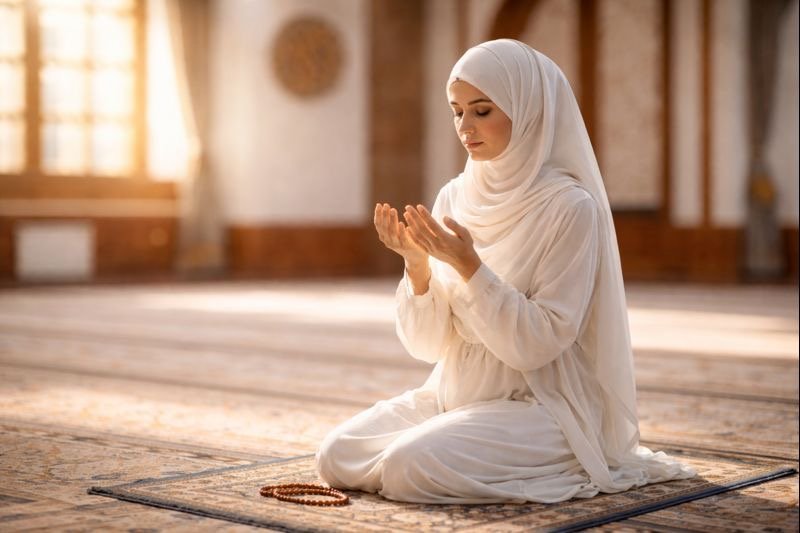
Laylat al-Bara’ah | The Night of Forgiveness
Laylat al-Bara’ah | The Night of Forgiveness: “Bara’ah,” translating to “The Night of Forgiveness and Salvation,” offers a glimpse into its significance on Sha’ban—the month preceding Ramadan, Explore the essence of Laylat al-Bara’ah, the Night of Forgiveness. Understand the core tenets of Islam, as derived from the Quran and Hadith, alongside vital religious observances such as fasting, prayer, and seeking absolution.
Shab-e-Barat: A Night of God’s Mercy
On the 15th of Sha’ban, known as Laylat al-Bara’ah or Shab-e-Barat, or the Night of Emancipation, also called Laylat an-Nisf min Sha’ban, the Night of the Middle of Sha’ban. This night is widely regarded as a time of divine mercy, forgiveness, and the determination of destinies. While not an official holiday like Eid, this night is eagerly anticipated by Muslims, offering a unique opportunity for spiritual growth and a chance to seek refuge from the Fire.
The Meaning and Significance: What is Laylat al-Bara’ah?
What It Means and How It Signifies:
In English, the word “Bara’ah” means freedom, virtue, or safety. Many believe that it is a night when Allah’s kindness saves many lives from the fires of Hell. This holiday is the name for the third night of the month.
The main meaning of this night comes from a number of prophetic stories. It is said that on this night, Allah Almighty goes down to the lowest sky and forgives all of His creation, except for those who are deeply involved in major sins like polytheism and malice.
In his Al-Umm, the renowned scholar Imam Shafi’i wrote, “The prayers are answered on five nights: Friday night, the nights of the two Eids, the first night of Rajab, and the middle night of Sha’ban.”
Evidences from Quran and Authentic Hadith
The Quran doesn’t name the 15th of Sha’ban by name, but many experts believe that a deep verse in the book connects it to that day:
“Indeed, We sent it down during a blessed night. Indeed, we were to warn [mankind]. On that night is made distinct every precise matter.” (Quran, Ad-Dukhan 44:3-4)
Classical scholars, such as Ibn Kathir, say that this “blessed night” could be Laylat al-Qadr in Ramadan or the middle of Sha’ban night, since that is also a time when things are set in stone.
The main proof for how good this night was comes from the Hadith literature, especially the works of Imam Ahmad, Ibn Majah, and at-Tirmidhi. These people marked some stories as either hasan (good) or saheeh li-ghayrihi (authentic because they have supporting chains).
1. The Night of Forgiveness and Decree:
Ash’ari’s companion Abu Musa (RA) said that the Prophet (SAW) said, “Indeed, Allah looks down on the night of the middle of Sha’ban and forgives all of His creation, except for the polytheist or the one who harbors hatred in his heart.” (Sunan Ibn Majah, backed up by authors like Albani).
2. A Time for Prayer and Salvation:
Mu’adh ibn Jabal (RA) said that the Prophet (SAW) said, “Allah looks at His creation on the night of the middle of Sha’ban and forgives everyone except those who partner with Him or have hatred in their heart.”
What It Means and How It Signifies: How do you say Laylat al-Bara’ah?
What it means and what it stands for: Do you know how to say Laylat al-Bara’ah?
In English, the word “Bara’ah” means freedom, virtue, or safety. Many believe that it is a night when Allah’s kindness saves many lives from the fires of Hell. This holiday is the name for the third night of the month.
The main meaning of this night comes from a number of prophetic stories. It is said that on this night, Allah Almighty goes down to the lowest sky and forgives all of His creation, except for those who are deeply involved in major sins like polytheism and malice.
In his Al-Umm, the renowned scholar Imam Shafi’i wrote, “The prayers are answered on five nights: Friday night, the nights of the two Eids, the first night of Rajab, and the middle night of Sha’ban.”
3. The Good Thing About Worshiping Tonight:
“The Prophet (SAW) stood in prayer for so long one night that I thought he had died.”
Aisha (RA) said. I got up and moved his thumb to see if he was still alive when I saw this. Since his thumb moved, I went back… After some time, he asked Aisha, “Did you think the Prophet had betrayed you?” I told him, “No, O Messenger of Allah, but I thought you were dead from being prostrated for so long.” “Do you know what night it is?” he asked.
For Allah and His Messenger know best; that’s what I said. “This is the night of the middle of Sha’ban,” he said. In fact, Allah looks at His slaves this night and stops the people who are full of envy in their state. He forgives those who ask for forgiveness and has mercy on those who ask for mercy. (Sunan al-Bayhaqi, Shu’ab al-Iman; Albani calls them hasan).
What to Do on Laylat al-Bara’ah: Recommended Acts of Worship
The things you should do tonight are based on general acts of worship, with a focus on asking for forgiveness (istighfar). You should not perform certain fixed practices or prayers that the Prophet (SAW) did not tell us about. You should stay away from innovation (bid’ah).
1-Voluntary Prayer (Salat al-Nawafil):
Spend the night in prayer on your own, like Tahajjud. One can pray individually, with sincerity and humility. There is no authentic, specific prayer formula for this night (like the “100 rak’ah Salat al-Khayr” often cited, which is not established from the Prophet). Pray as one normally would in night prayer, reciting lengthy portions of the Quran, bowing, and prostrating with devotion.
2. Supplication (Dua) and Seeking Forgiveness (Istighfar):
This evening is the main focus of the night’s observance. Sincerely turn to Allah, acknowledging your failings, and plead for His pity and forgiveness. Employ the general, lovely supplications that the Prophet (SAW) taught. A profound dua reported for this night is-
“O Allah, I seek refuge in Your joy from Your anger, and in Your forgiveness from Your punishment… I cannot praise You as You have praised Yourself.” (Muslim)
Continuously recite: Astaghfirullah al-‘Azeem wa atubu ilayh (I seek forgiveness from Allah, the Magnificent, and I repent to Him).
3. Recitation of the Quran: Reflect said,
“Whoever upon the words of Allah. Recite Surah Yasin (Chapter 36) with contemplation, as it is reported in a weaker but oft-cited narration that the Prophet said, “Whoever recites Surah Yasin at night seeking Allah’s pleasure, Allah forgives him.” The Sunan ad-Darimi.
4. Fasting the Next Day (15th of Sha’ban):
Fasting on this day is not as important as during Ramadan or the white days (13th, 14th, and 15th of every month), but it’s still good. “When it is the middle of Sha’ban at night, spend the night in prayer and fast the next day,” said the Prophet (SAW). This is Sunan Ibn Majah. Some people thought he was weak for fasting during Sha’ban, but the Prophet always did it. It is a proven Sunnah to fast on the “white days” of every lunar month, which includes the 15th.
5. Thought and Repentance (Tawbah):
Tonight is a good time to really think about yourself. Avoid repeating your past mistakes and strive to mend any damaged relationships. The Hadith makes it clear that people who are upset (mushahin) can’t be forgiven. This lesson shows how important it is to make peace.
6. Remembering Allah (Dhikr):
Saying words like “SubhanAllah,” “Alhamdulillah,” “La ilaha illallah,” and “Allahu Akbar” throughout the day is a simple way to invoke Allah’s presence.
Things to watch out for and explain
It’s important to go into this night with the right mindset:
No Specified Congregational Prayer: Large, planned, and set-format prayers for the whole community on this night are new and not something the Prophet did. You can worship by yourself or with your family.
Avoid Celebrations: In some countries, this is the night for fireworks, holiday meals, and lighting up the night sky. The Sunnah does not endorse these kinds of actions.
Balance in Worship: When striving in worship, one shouldn’t put too much on themselves to the point where they get worn out and don’t want to praise anymore. The Prophet always and moderately worshiped God.
Conclusion: A way for each person to reach divine grace:
Laylat al-Bara’ah is a gift from God. It’s a spiritual break before the tough training of Ramadan. It is a night that asks Muslims to turn away from carelessness and into the arms of a forgiving Allah. It’s not about rules and rituals; it’s about turning to Allah with all your heart, asking for forgiveness, hoping for His kindness, and hoping to be freed from the Fire. Muslims can hope that by the time the 15th of Sha’ban dawns, they will have been forgiven, refreshed, and ready to be counted among the lucky for the coming year if they pray, beg, and confess their sins.
Allah, please accept our prayer, forgive our sins, and let us see this blessed night with faith and a humble heart. Ameen.
FAQ: Laylat al-Bara’ah – The Night of Forgiveness and Salvation:
Q1-How do you say Laylat al-Bara’ah?
A: It is celebrated on the 15th night of the Islamic month of Sha’ban. It is also called Shab-e-Barat or the Night of Record. People believe that Allah decides the fates of everyone for the next year on this night, which is also a time of divine kindness, forgiveness, and spiritual cleansing.
Q2-What does “Bara’ah” mean?
A: Q”Bara’ah” translates to “innocence,” “freedom,” or “salvation.” It signifies a night when believers seek forgiveness and are potentially saved from divine punishment.
Q3-In what way does this night matter?
A: In Islamic belief, this is the night that Allah comes down from heaven to forgive sins, answer prayers, and decide what will happen to each person in the coming year. It is seen as a chance to renew one’s faith and ask God for forgiveness.
Q4-Is Laylat al-Bara’ah talked about in the Quran?
A: The Quran doesn’t name the 15th of Sha’ban by name, but many experts connect the night to verses like Surah Ad-Dukhan (44:3–4), which talks about a blessed night when everything is set in stone.
Q5-In what hadith does it say that this night should be observed?
A: Several hadith stress how important it is:
QIt was said by the Prophet Muhammad (SAW) that Allah looks down on the middle of Sha’ban night and forgives everyone, except those who worship more than one god or hold grudges (Sunan Ibn Majah).
Sunan al-Bayhaqi says that Aisha (RA) said the Prophet (SAW) spent this night in long prayers and worship.
Q6-What should Muslims do to celebrate Laylat al-Bara’ah?
A: Voluntary Prayers (Nafl): Pray an honest prayer all night, like Tahajjud.
Prayer (Dua) and Asking for Forgiveness: Ask Allah for forgiveness and say istighfar (for example, “Astaghfirullah”).
Reading the Quran: Think about the words, especially Surah Yasin.
The next day, you should fast. According to Sunan Ibn Majah, you should fast on the 15th of Sha’ban.
Dhikr and Reflection: Remember Allah and truly say sorry for your actions.